Sabri Lamouchi took the Carthage Eagles job knowing the brief: end the habit of treating the World Cup as a destination rather than a stage. Tunisia have reached six finals now, and across all of them they have never escaped the group, a streak that defines this footballing generation as much as any tactical trend. A FIFA ranking of 44 sits roughly where they have hovered for a decade — respectable in Africa, mid-table globally — and Lamouchi, whose club work at Nottingham Forest and Rennes earned him a reputation for organised, counter-leaning sides, was hired to convert that baseline into something more durable in Group F.
Key players


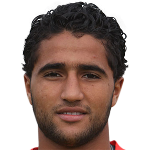
Tunisia's spine runs through Ellyes Skhiri, whose season at Eintracht Frankfurt produced 35 tackles, 31 interceptions and 97 ball recoveries across 34 appearances — the kind of volume that lets a 4-2-3-1 breathe. Alongside him, Rani Khedira of Union Berlin offers a more forward-leaning profile from the same role: 6 goals from 2.9 xG in 35 games, plus 62 tackles and 39 interceptions, giving Sabri Lamouchi a double pivot that screens and scores. The creative weight sits with Elias Achouri at FC København, the team's most productive attacker by a clear margin — 4 goals and 6 assists, 4.5 xG, 34 key passes and 6 big chances created in 32 league outings, with 27 successful dribbles to carry possession upfield. Behind them, right back Yan Valery contributes another layer of supply, his 37 key passes and 4 assists from Young Boys hinting at where Tunisia's width will come from when Achouri drifts inside.
Predicted XI


Form going into the tournament
Lamouchi's 4-2-3-1 is built from the base outwards. Skhiri and Khedira form a double pivot designed less to circulate than to screen, freeing Talbi and the full-backs to defend a mid-block rather than a high line, with the press triggered selectively in wide areas once the ball travels. Transitions run through Hannibal as the connecting 10, with Achouri and Abdi overlapping down the left to manufacture the bulk of the chance creation. Two questions linger. The centre-back partnership beside Talbi is unsettled, with Adem Arous penciled in but lightly tested at this level. And the lone striker role remains the system's structural weakness: if Hazem Mastouri cannot hold play long enough for Hannibal and the wingers to arrive, the block-and-counter model loses its outlet.
Team form
Group F gives Tunisia a clear hierarchy of problems. The opener against Sweden, ranked 38th, is the one fixture where the gap is narrow enough that a result feels reachable, and realistically it has to be the platform for anything else. Japan, at 18th, brings a tempo and technical level that has historically troubled African sides, and the Netherlands, seventh in the world, project as the heaviest lift of the three. The model's call is a group-stage exit, and the maths supports it: Tunisia likely need four points to have any chance of seeing the last 32, with the third-place permutations beyond their control. Success would mean carrying something into matchday three; disappointment would be leaving the Sweden game empty-handed and the tournament effectively over by 21 June.
Country-form leaders
















Club-form leaders









Group stage
Group fixtures