
Ronald Koeman returns for his second spell in charge, the familiar hand brought back after Louis van Gaal's 2022 quarter-final exit and a turbulent Euro 2024 semi-final run under his own watch. His reputation rests less on innovation than on managing senior players and restoring a recognisable Dutch identity, which the KNVB clearly valued over a bolder appointment. A FIFA ranking of seventh flatters a generation that has not reached a major final since 2010, and has only twice in the last four World Cups gone beyond the last eight. Qualification was navigated without drama. Anything short of the semi-finals will feel like underachievement.
Key players



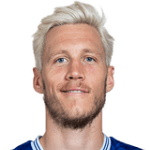
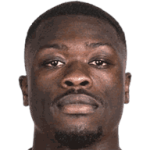
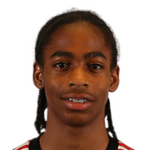
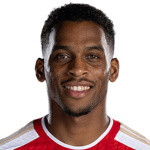
Virgil van Dijk anchors everything at the back, and his Liverpool numbers underline why: 218 aerials won and 270 duels won across 4,971 minutes, with eight goals and 40 interceptions thrown in for good measure. He is the reference point Koeman builds around. Further forward, Donyell Malen arrives in genuine form after a 22-goal Roma season from 19.2 xG and 117 shots, the kind of finishing volume the Dutch have lacked in recent cycles; expect him to drift from the left into central pockets alongside Memphis Depay. The connective tissue is Tijjani Reijnders, whose 7 goals and 7 assists from central midfield, off 8.2 xG and 45 key passes in 47 Manchester City appearances, capture a profile that is neither pure creator nor pure runner but both. With Frenkie de Jong's 138 ball recoveries behind him and Cody Gakpo's 15 big chances created outside, Reijnders is the player who ties this Netherlands together.
Predicted XI


Form going into the tournament
Koeman's 4-3-3 is built around controlled possession and a midfield triangle that does most of the work in both phases. Gravenberch screens behind De Jong and Reijnders, which lets De Jong drift into half-spaces to dictate tempo and frees Reijnders to attack the box as a late-arriving runner. The defensive line sits relatively high, leaning on Van Dijk's recovery reading rather than a frantic counter-press, with Gakpo and Malen expected to pin full-backs and spring quick transitions through Depay. Two questions linger. The right-back slot is genuinely contested, with Micky van de Ven penciled in there ahead of the more natural Timber, an awkward solution. And in goal, Verbruggen is the presumed starter, but Roefs's club form makes the pecking order less settled than Koeman would like.
Team form
Group F should be navigable. Japan, ranked 18th, are the most technically equipped opponent and the fixture most likely to dictate seeding; Sweden (38th) and Tunisia (44th) present problems of physicality and compactness rather than overall quality, and anything less than seven points would count as underperformance. From there the bracket is contingent on group placement and third-place permutations, but the model projects a Round of 32 meeting with Morocco — eighth in the world and the sternest early hurdle — before a likely Round of 16 tie against Bosnia and Herzegovina and a probable quarter-final collision with top-ranked France. That last step is where the model calls it, with a quarter-final exit the predicted finish. Reaching the last eight would constitute success; elimination before the Round of 16 would be a clear disappointment.