Julian Nagelsmann inherited a Germany side in genuine disrepair in September 2023, the youngest coach the federation had ever appointed to the senior job and one whose Bayern Munich and RB Leipzig work suggested a press-heavy, possession-led identity rather than the cautious pragmatism of his predecessors. A home Euros quarter-final exit bought him credit and time; qualification for 2026 was navigated without alarm. Tenth in the FIFA ranking still understates a four-time world champion whose last final appearance came in 2014, but the gap between that generation and this one is the context Nagelsmann is being asked to close.
Key players


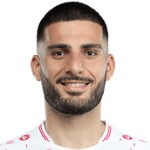
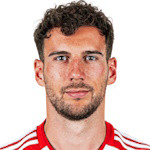
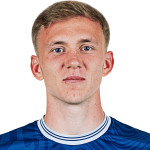
Florian Wirtz, now at Liverpool, is the creative fulcrum: 8 goals and 8 assists with 100 key passes and 62 dribbles across 49 appearances, an output matched to a 9.2 xG that suggests the end product is sustainable rather than spiked. Jamal Musiala, the Bayern Munich attacking midfielder, offers the closer-range threat behind Kai Havertz, with 5 goals, 6 assists and 7.0 xG from just 1,182 minutes — a per-90 return that explains why Germany's attack runs through him when fit. Joshua Kimmich anchors everything from a converted left-back berth, captain and metronome: 12 assists, 95 key passes and 25 big chances created from Bayern alongside 56 tackles, 43 interceptions and 205 ball recoveries, the rare profile that handles both build-up and screening duties. In reserve, Stuttgart's Deniz Undav (26 goals, 24.6 xG) gives Nagelsmann a genuine penalty-box alternative should Havertz's form waver, though he begins behind in the pecking order.
Predicted XI


Form going into the tournament
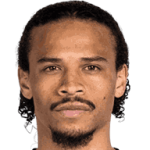
Nagelsmann's 4-2-3-1 is built around possession in the opposition half, with a high defensive line, aggressive counter-pressing on the first phase of the turnover, and a build-up that asks Kimmich to tuck in from right-back into a midfield three alongside Goretzka and Pavlovic. That positional swap unlocks Wirtz and Musiala as interior creators behind Havertz, with Sané stretching the back line. The two open questions are uncomfortable. Kimmich at right-back remains a compromise — it suits the build-up but exposes the channel against quick, direct wingers, the same vulnerability the high line carries. And the centre-forward slot is genuinely contested: Havertz offers the link play Nagelsmann's structure prefers, but Undav's case as a penalty-box finisher is hard to ignore, particularly in tournament games that tighten and demand a more orthodox nine.
Team form
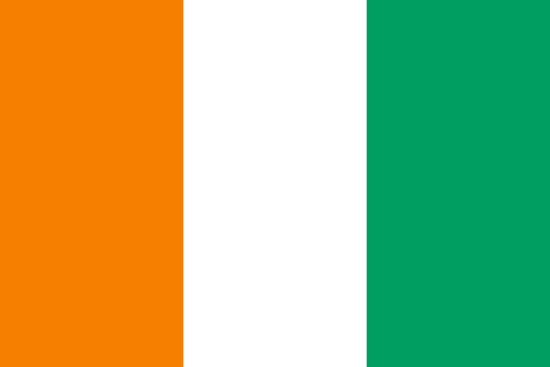
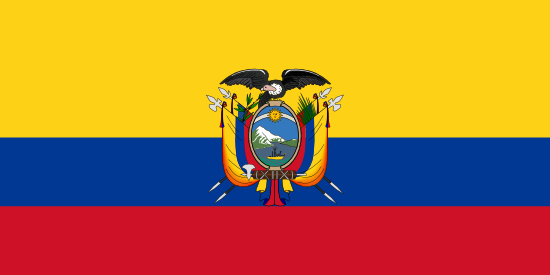
Group E opens against Curacao (82nd in FIFA's rankings), a fixture Germany should control, before sterner examinations against Côte d'Ivoire (34th) and a closing match with Ecuador (23rd) that may decide top spot. Assuming the bracket falls as expected — and knockout opponents always depend on group outcomes and third-place permutations — Nagelsmann's side are projected into a Round of 32 tie with Paraguay (40th), a winnable game on paper, before a probable collision course with top-ranked France in the last 16. That is where our model calls time, with a Round of 16 exit the predicted finish. Anything beyond a quarter-final would represent genuine progress; elimination before the last 16, given the group draw, would count as a clear disappointment.