Didier Deschamps arrives at his final tournament in charge having already redrawn the ceiling for a France manager: a 2018 World Cup, a 2022 final lost on penalties, a Euro 2016 final on home soil. Fourteen years in, his pragmatism still divides opinion at home, but the trophy cabinet ends the argument. France top the FIFA ranking, qualified without alarm, and arrive as a generation whose peak years line up almost exactly with this cycle. Anything short of a deep run will be read as underachievement, and Deschamps, stepping down after the tournament, knows the verdict on his tenure will be written in June and July.
Key players


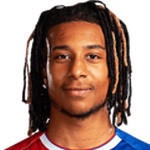
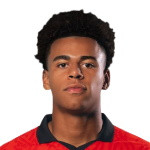
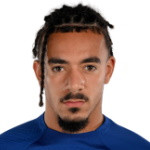
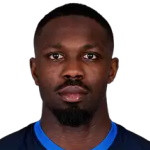
Kylian Mbappé arrives off a season that bordered on the absurd at Real Madrid: 42 goals and 6 assists in 43 appearances, 31.4 xG from 209 shots. The volume alone reframes what France can ask of him, and the supply line behind him is unusually rich. Michael Olise, now at Bayern Munich, contributed 21 goals and 28 assists in 51 games, with 125 key passes and 40 big chances created — numbers that argue for him as the central creative hub rather than a touchline winger, with Ousmane Dembélé (19 goals, 11 assists, 13.7 xG) stretching the left. The ballast comes from Aurélien Tchouaméni, whose Real Madrid campaign produced 92 tackles, 74 interceptions and 192 ball recoveries across 47 matches; he is the player who lets the front four take risks. William Saliba anchors the back line behind him, while Ibrahima Konaté's 4,320 minutes for Liverpool offer serious insurance should Deschamps need to rotate his centre-backs.
Predicted XI


Form going into the tournament
Deschamps lines France up in a 4-2-3-1 that is more pragmatic than its attacking personnel suggests: a mid-block rather than a full press, a back line that holds a cautious depth to protect Maignan's space, and a double pivot of Tchouaméni and Rabiot designed to screen the centre-backs before springing transitions through the front four. Saliba and Upamecano give the defence the recovery pace to push higher when needed, while Olise operating as the 10 behind Mbappé pulls the shape into something closer to a 4-2-4 in possession. Two questions linger. The right wing slot, with Doué penciled in ahead of more established names, is the most contested call in the XI. And at left-back, the drop-off behind the first choice is the squad's thinnest area against quick wide combinations.
Team form
Group I opens against Senegal on 16 June, and the 14th-ranked Africans are the only opponent in the pool capable of seriously testing this defence over 90 minutes; Iraq (57th) and Norway (31st) should be navigated comfortably, though the Norwegians carry enough attacking threat to demand a serious team selection. Top spot looks the baseline expectation. Beyond the group, the actual bracket hinges on how third-place qualifiers shake out, but the model projects a Round of 32 meeting with Iran (21st), a probable R16 collision with Germany (10th), and a quarter-final against the Netherlands (7th) before a potential semi-final with Spain (2nd) — where the run is forecast to end. Anything short of the last four would register as disappointment; reaching the final would vindicate the project.