Lionel Scaloni arrives in North America as the rare international coach whose tenure has outgrown the experimental phase. Appointed on an interim basis in 2018 with almost no senior coaching CV, he has since delivered a Copa América and the 2022 World Cup, ending a 36-year wait that had defined a generation raised on near-misses in 1990, 2014 and the 2015 and 2016 Copa finals. Argentina arrive ranked third by FIFA, qualified from CONMEBOL with room to spare, and carry the unusual burden of being defending champions rather than perennial challengers. Scaloni's calm, low-ego management is the connective tissue holding that status together.
Key players


Tactical setup: who plays where, the manager's preferred shape, how they want to control the game.
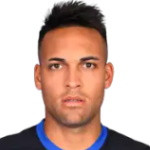
Julián Álvarez has become the focal point of the attack at Atlético Madrid, with 20 goals and nine assists from 16.8 xG across 48 appearances, his 84 key passes and 19 big chances created underlining a centre forward who drops in and links play rather than waiting on service. Behind him, Enzo Fernández has had the most productive season of his Chelsea career, contributing 15 goals and eight assists while logging 81 tackles, 22 interceptions and 199 ball recoveries in 54 games — a genuine box-to-box return that gives Scaloni's midfield both bite and a late-arriving runner. The defensive anchor remains Nicolás Otamendi, who at Benfica still produced 66 tackles, 68 interceptions and 166 aerial duels won across 4,061 minutes, numbers that explain why he keeps his place ahead of younger options. Lautaro Martínez, with 22 goals and 17.0 xG for Inter, waits in reserve behind Álvarez — an unusually well-stocked centre-forward berth.
Predicted XI


Form going into the tournament
Scaloni's 4-3-3 is less rigid than the label suggests. Out of possession Argentina press in coordinated bursts rather than chasing for ninety minutes, with the front three funnelling play inside toward Enzo Fernández, who screens a back four that defends a mid-to-high line and trusts Romero's recovery pace to cover the space behind. In build-up the shape tilts: a full-back tucks in to free Messi between the lines, and Julián Álvarez drifts wide to vacate the centre for runners from deep. Two questions linger. The right wing remains contested, with Thiago Almada penciled in but far from settled, and the central midfield lacks a true ball-winner if Fernández is isolated against quicker, more vertical opponents — a vulnerability disciplined sides can exploit on the counter.
Team form
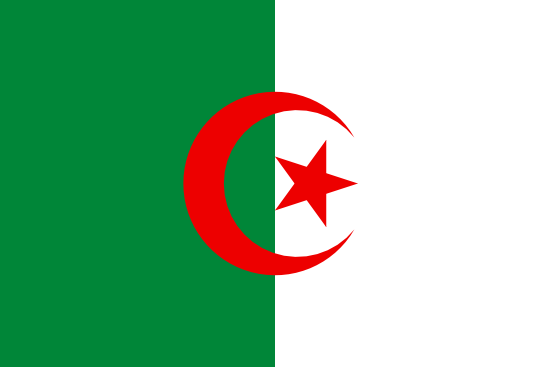
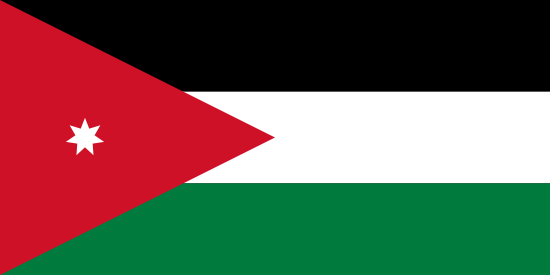
The group draw is kind, which matters more in a 48-team format where the margin for error has widened. Algeria (28th) open proceedings and represent the most technically awkward of the three; Austria (24th) on matchday two will test Argentina's transitional defending; Jordan (63rd) should be navigated comfortably to seal top spot. From there the bracket sharpens. Subject to how the group shakes out and which third-placed sides advance, the model projects a Round of 32 meeting with Uruguay (17th), a likely Round of 16 tie against the United States (16th) on home soil, and a quarter-final collision with Portugal (5th) — where our model calls time on the run. Reaching the last eight would constitute a defensible defence of the title; exiting before the Round of 16 would register as a genuine setback.