Vladimir Petković took the Algeria job in 2024, bringing the pragmatism that carried Switzerland to a European Championship knockout upset over France and tasked with restoring credibility after the 2022 qualification miss. The Fennec Foxes sit 28th in the FIFA ranking, a respectable perch for a side whose modern peak remains the 2019 Africa Cup of Nations triumph and whose World Cup history thins out quickly after the 2014 Round of 16 run under Vahid Halilhodžić. A smooth return through African qualifying has reset expectations: this is a generation viewed as too talented to merely participate, and Petković has been hired to convert that potential into a knockout appearance.
Key players
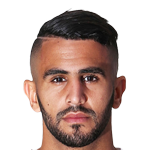
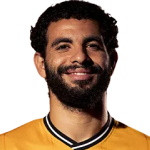
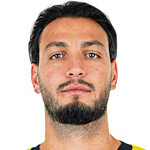
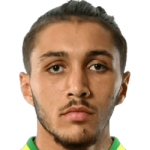
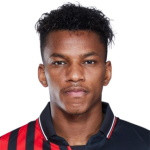
Amine Gouiri gives Algeria a centre-forward operating at a healthy rate: 11 goals and 5 assists from 7.8 xG in 27 league appearances for Marseille, with 10 big chances created suggesting he links as well as he finishes. Out wide, Anis Hadj Moussa has emerged as the most productive carrier in the squad, returning 12 goals and 6 assists for Feyenoord while attempting 94 shots and completing 92 dribbles across 39 games — the volume of a forward who shoulders creative load rather than waits for service. Riyad Mahrez remains the orchestrator on the opposite flank, his Saudi Pro League numbers (8 goals, 11 assists, 104 key passes and 20 big chances created in 40 appearances) pointing to a player who has tilted further toward provider. Behind them, Ramy Bensebaini offers an unusual profile for a centre-back at Dortmund — 7 goals and 57 tackles in 32 games — giving Petković a defender comfortable stepping into attacking phases.
Predicted XI


Form going into the tournament
Petković's 4-3-3 leans on width and overlapping full-backs rather than sustained territorial dominance, with Aït-Nouri pushing high on the left and Mahrez drifting infield from the right to let the run come outside him. The midfield triangle is built around Bentaleb screening in front of a back four that defends a mid-block, inviting pressure to break before springing Hadj Moussa and Gouiri in transition. The press is selective, triggered by wide passes rather than goal-kicks. Two questions remain unresolved. The right of midfield is genuinely contested, with Aouar and Boudaoui offering different profiles alongside Bentaleb, and the bench behind Gouiri is thin — losing the centre-forward forces a reshape rather than a like-for-like swap. Against quicker front lines, the high left flank also leaves Mandi exposed to diagonal runs.
Team form
Group J opens against Argentina, ranked third in the world, where containment rather than victory is the realistic ambition; the campaign more plausibly turns on the second matchday against 63rd-ranked Jordan, a fixture Algeria should be winning to set up a decider with 24th-ranked Austria, the closest peer in the section and likely the arbiter of who finishes second. From there the bracket is unsettled — actual opponents hinge on group order and the third-place permutations — but our model projects a Round of 32 meeting with Belgium and, should that be navigated, a probable Round of 16 tie against Türkiye, which is where the run is forecast to end. Reaching the last 16 would validate the cycle; exiting at the group stage, given the Jordan fixture, would count as a clear disappointment.
Country-form leaders

















Club-form leaders




Group stage
Group fixtures