Marcelo Bielsa took charge of Uruguay in May 2023, and the appointment carried weight beyond the obvious. The Argentine's reputation for vertical, high-pressing football and exhaustive preparation made him an unusual fit for a federation more accustomed to pragmatism, and the brief was explicit: refresh a generation that had carried the shirt since 2010. Uruguay reached the semi-finals in South Africa and the quarter-finals in 2018, but exited the group in Qatar. A FIFA ranking of 17 understates the talent at Bielsa's disposal, and the CONMEBOL qualifying campaign was steady rather than spectacular. Anything short of the last sixteen would register as underachievement.
Key players

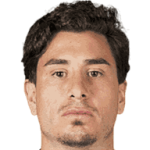

Federico Valverde is the engine that makes this side coherent, and his Real Madrid numbers explain why: 8 goals and 12 assists in 47 appearances, 195 ball recoveries, 64 tackles and 153 duels won. He is, in effect, two midfielders compressed into one, which is what allows Bielsa to ask so much of the players around him. Ronald Araújo anchors the back line on the evidence of a demanding Barcelona campaign — 37 games, 70 aerials won, 108 duels won and a 2.2 xG return that yielded four goals from set pieces. Alongside him, Rodrigo Bentancur offers the calmer rhythm: 73 tackles, 48 interceptions and 168 recoveries in 34 Tottenham outings, with the passing range to turn defence into attack. Rodrigo Zalazar's 22 goals at Braga make him the most prolific Uruguayan in Europe this season, but he sits behind the established attackers and arrives as a genuine option in reserve.
Predicted XI


Form going into the tournament
Bielsa's imprint is unmistakable: a 4-3-3 built on man-oriented pressing, a high defensive line and vertical transitions that ask full-backs Olivera and Varela to function as auxiliary wingers. The midfield triangle is the engine, with Ugarte screening so Valverde can drive forward and Bentancur shuttles between lines, though the shape leaves Araujo and Giménez exposed to runs in behind whenever the press is bypassed — a recurring vulnerability against opponents who play through pressure cleanly. Up front, Darwin Núñez stretches defences vertically while Pellistri and Maxi Araújo hug the touchlines. The open questions concern the right flank, where Pellistri's starting berth is contested, and the goalkeeper position: Rochet is penciled in, but Muslera's experience keeps the conversation alive. Depth at centre-back, behind the first-choice pair, remains thin.
Team form
Uruguay's group opens with two fixtures they should control on paper — Saudi Arabia (61st in FIFA's ranking) on 15 June and Cape Verde (69th) six days later — before the genuine measuring stick against Spain, ranked second in the world, on 27 June. Six points from the opening pair would likely settle qualification regardless of what happens in the finale, and second place looks the more probable route. That is where the draw bites: our model projects a Round of 32 collision with Argentina and has Uruguay exiting there. Actual knockout opponents depend on group permutations and the third-placed qualifiers, but a deep run requires avoiding the heavyweight side of the bracket. Success means a quarter-final; anything short of the last 16 would count as a clear underperformance.
Country-form leaders














Club-form leaders




Group stage
Group fixtures