Cape Verde arrive at their first World Cup, a debut that reframes everything about how this federation of roughly half a million people is measured. Pedro Leitão Brito, known universally as Bubista, has been in charge since 2020 and is now the defining figure of the islands' football identity, having already guided them to the Africa Cup of Nations quarter-finals in 2024 on a pragmatic, organised brief that prizes defensive structure over possession volume. A FIFA ranking of 69 understates the trajectory; qualification alone exceeded any reasonable projection. In Group H, simply competing for a third-place finish would validate a generation that has outperformed the country's resources.
Key players


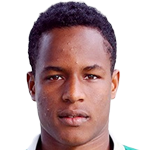
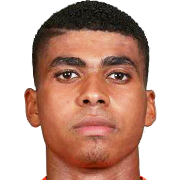
Sidny Lopes Cabral is the most eye-catching name on the teamsheet, a Benfica left back whose attacking returns read more like a winger's: 6 goals and 5 assists in 26 appearances, 4.7 xG, 12 big chances created and 51 shots. Cape Verde will lean on him to provide width and final-third quality from deep. Ahead of him on the right flank, Vitória Guimarães winger Telmo Arcanjo offers a different kind of threat — 29 key passes and 19 dribbles in 1,273 minutes, his 1.0 xG suggesting a player who creates more than he finishes. The spine belongs to João Paulo of FCSB, the defensive midfielder who anchors the 4-2-3-1. His numbers point to genuine two-way value: 45 tackles, 34 interceptions, 196 ball recoveries and 214 duels won across 35 games, plus 3 goals and 2 assists. If the islanders are to trouble Spain or Uruguay, the balance between Cabral's overlaps and João Paulo's screening will define the performance.
Predicted XI


Form going into the tournament
Bubista's 4-2-3-1 is built around a compact mid-block rather than aggressive pressing, conceding territory to teams who want it and committing numbers to the second phase instead. João Paulo and Laros Duarte screen in front of the back four, which lets Sidny Lopes Cabral push high from left-back and gives Ryan Mendes and Telmo Arcanjo licence to drift inside while Yannick Semedo floats between the lines. Build-up runs through the full-backs more than the centre-halves, and transitions are direct, aimed at the channels either side of Dailon Livramento. Two questions linger: the right-back slot, where Steven Moreira is preferred but Wagner Pina offers a more defensive profile, and centre-back depth behind Roberto Lopes and Diney Borges, where Logan Costa is barely tested at club level.
Team form
Group H hands the debutants a steep gradient. The opener against Spain, ranked second in the world, is the kind of fixture where containment rather than competition is the realistic ambition. Uruguay, 17th, arrives six days later as the genuine swing match — the one that will likely decide whether Cape Verde's first World Cup carries into a second week. Saudi Arabia, 61st and the closest opponent on paper, then becomes a near must-win on 27 June. The model's call is a group-stage exit, and any knockout passage would depend on both results elsewhere and the third-placed permutations. Success, in that context, means arriving at matchday three with qualification still mathematically alive; disappointment would be three defeats and a points tally that flatters none of the progress made to get here.
Country-form leaders


















Club-form leaders



Group stage
Group fixtures