Hossam Hussein inherits a project rather than a blank canvas, taking charge of an Egypt side that has spent decades watching World Cups from the outside. This is only the Pharaohs' fourth appearance at the tournament and their first since 2018, where they exited in the group stage; the 1990 and 1934 editions remain distant footnotes. A FIFA ranking of 29 understates the historical context but reflects a generation that has dominated continental conversations without translating it globally. Hussein, a domestically-shaped coach known for pragmatism over flourish, has steered qualification competently. Expectation, sharpened by African pedigree, sits uncomfortably ahead of a draw that offers little margin.
Key players
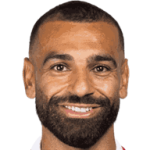

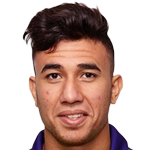
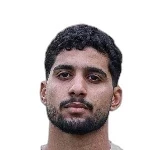
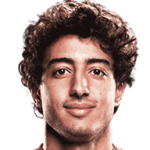
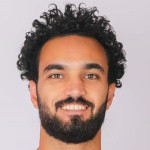
Egypt's hopes lean heavily on Mohamed Salah, whose Liverpool numbers — 12 goals, 11 assists and 16.9 xG across 41 appearances, with 80 key passes and 20 big chances created — confirm he remains both finisher and chief supplier from the right. Alongside him, Omar Marmoush gives the attack a second high-volume threat: eight goals and 52 shots in 1,393 minutes for Manchester City, often from cramped substitute roles, suggest a forward who converts limited service efficiently. The third name is Mahmoud Trezeguet, who has been Egypt's most prolific scorer at club level this season with 17 goals from 113 shots in 28 games for Al Rayyan, offering a left-sided counterweight if defences crowd Salah. Behind them, Hamdy Fathy provides the midfield ballast — 28 tackles, 17 interceptions and 99 duels won in 17 appearances for Al Wakrah — the kind of unglamorous screening work that will determine whether Egypt's attackers see enough of the ball.
Predicted XI


Form going into the tournament
Hossam Hussein's 4-2-3-1 is built around a double pivot of Hamdy Fathy and Marwan Ateya, which gives the fullbacks — Mohamed Hany especially — license to push high and feed the wide forwards. The shape is pragmatic rather than aggressive: a mid-block that concedes the first phase, compresses the half-spaces, and trusts Salah and Trezeguet to hurt opponents on the counter, with Emam Ashour floating between lines to link play into Marmoush. Two questions linger. The CAM slot behind Marmoush is genuinely contested, with Ashour the incumbent but not yet undisputed. More pressing is centre-back depth: behind Ramy Rabia and Yasser Ibrahim, the cupboard is thin, and a settled defensive line tends to creak when stretched by quick combinations through the inside channels — a vulnerability sides with mobile forwards will probe.
Team form
Egypt open against Belgium, ranked ninth by FIFA and the clear seed in Group G, a fixture that will likely set the ceiling rather than the floor for their campaign. New Zealand, 85th, is the match that has to be won if the tournament is to extend beyond two weeks, while Iran at 21st looms as the genuine swing game — a contest between sides of broadly similar standing that should decide second place. The model projects a Round of 32 exit, with a probable tie against the United States once group permutations and third-place qualifiers shake out, though that pairing is far from fixed. Reaching the last 16 would constitute a successful return; elimination in the group, particularly with anything less than four points, would register as a disappointment.