Thomas Christiansen Tarín inherited a programme still calibrating its ambitions after Panama's debut World Cup in 2018, and the Dane has spent his tenure trying to convert a generation of CONCACAF regulars into a side capable of a second appearance on the global stage. That second appearance is now confirmed. Russia 2018 ended without a point; reaching 2026 through a tightened qualifying format is, in itself, the headline achievement. A FIFA ranking of 33 is the highest sustained position the country has held, and frames the project fairly: Panama arrive as competitive outsiders in Group L, where progression would constitute genuine overachievement rather than fulfilled expectation.
Key players



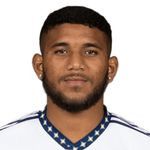
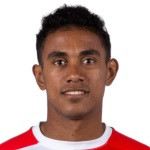
José Luis Rodríguez carries Panama's most direct creative threat from the left. The Juárez winger logged 9 assists and 12 big chances created across 37 appearances this season, with 61 key passes and 64 dribbles pointing to a player who both unlocks defences and beats his man — useful given the calibre of full-back he'll face. Behind him, Andrés Andrade has grown into a genuine ball-playing centre-back at LASK Linz: 57 tackles, 33 interceptions and 58 aerials won across 30 games, while also contributing 3 assists and 13 big chances created, an unusual creative return from defence. Amir Murillo gives the right side a Süper Lig-tested edge, the Beşiktaş full-back pairing 42 tackles and 118 ball recoveries with 4 assists and 6 big chances created from 36 appearances. José Fajardo is the nominal centre-forward but arrives with a thin sample — 2 goals from 164 minutes — so the goal burden likely falls on the wider runners.
Predicted XI


Form going into the tournament
Christiansen's 4-3-3 is built around compactness rather than sustained pressure, with a mid-block that funnels play wide and a back four that holds a conservative line rather than stepping aggressively up the pitch. Transitions are the point: win it through Cristian Martínez or Carlos Harvey screening in front of the centre-backs, then break quickly down the left through José Luis Rodríguez, with Amir Murillo overlapping on the opposite flank to stretch the pitch. Two questions linger. The first is the centre-forward berth, where José Fajardo's limited club minutes leave the starting role genuinely contested. The second is depth at centre-back behind Andrade and Ramos; an injury there would force a structural rethink, since the whole system depends on the two centre-backs absorbing pressure without the full-backs having to tuck in.
Team form
Group L opens with the most navigable assignment on paper: Ghana, ranked 74th by FIFA, is the fixture that has to yield points if Panama are to stay alive into matchday three. From there the gradient steepens sharply. Croatia, 11th in the world, brings the kind of midfield control that has historically punished Concacaf sides who concede the centre, and the closer against fourth-ranked England is the bracket's hardest single assignment. The model's projection is a group-stage exit, and with knockout opponents contingent on the final table and third-place permutations, no R16 tie can sensibly be named yet. Success looks like four points and a live final matchday; disappointment would be leaving the United States, Mexico and Canada without a result against Ghana to show for the trip.
Country-form leaders












Club-form leaders











Group stage
Group fixtures